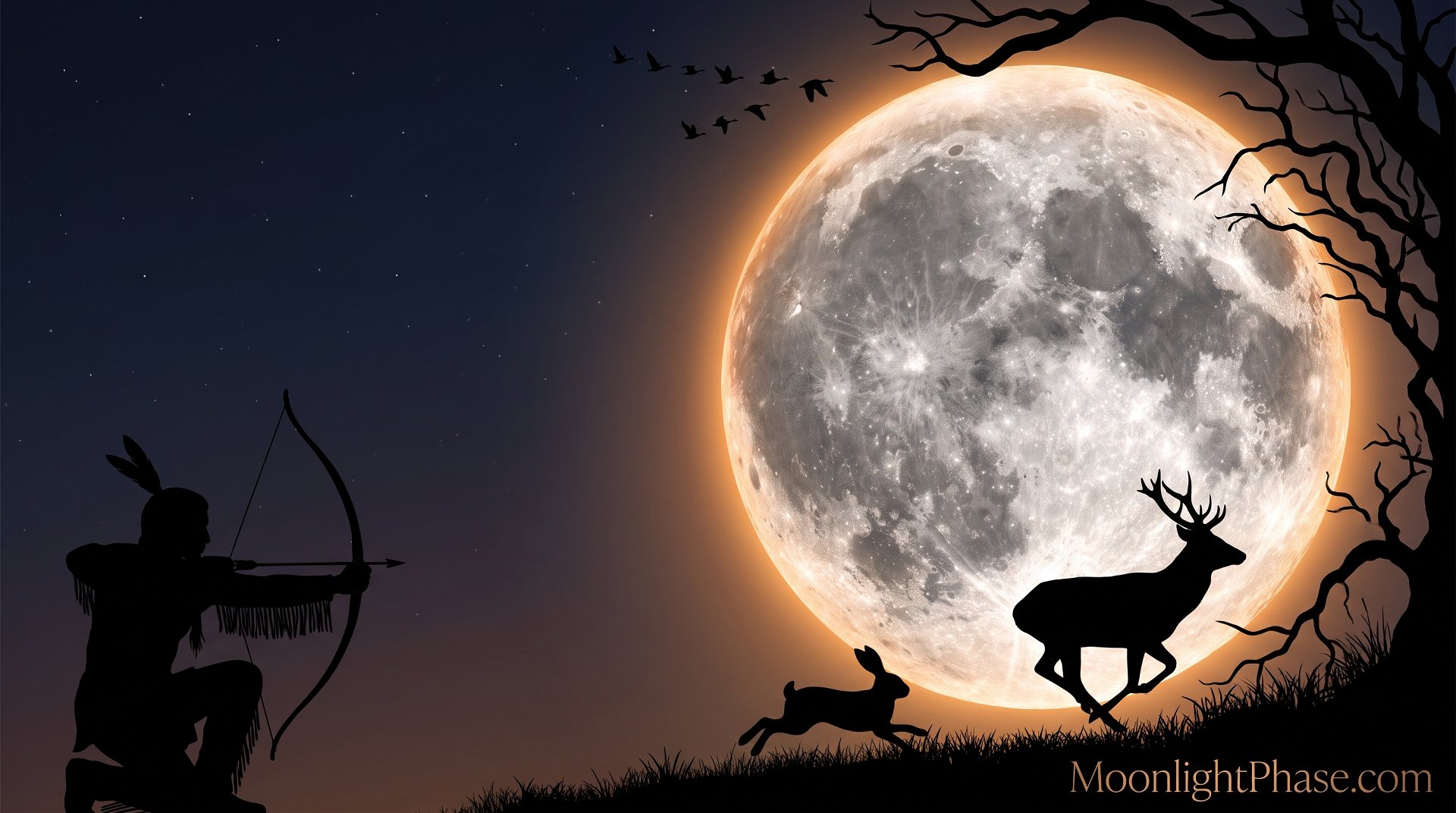

The Hunter's Moon 2026 falls on Monday, October 26, 2026 — the full moon that follows September's Harvest Moon, according to moonlightphase.com. The moon reaches peak fullness during the evening hours and rises in the east shortly after local sunset, kicking off several consecutive nights of bright, early-evening moonlight. For tonight's exact moonrise time and live phase data, visit the Moon Phase Clock, or visit the moon phase today page.
What Makes the Hunter's Moon Special
The Hunter's Moon is October's full moon — the one that follows the Harvest Moon and shares its signature feature: a compressed moonrise delay. Near the autumn equinox, the moon's orbital path runs at a shallow angle to the eastern horizon, causing it to rise only about 25–40 minutes later each night in October instead of the usual 50. The result is several consecutive evenings where the moon appears almost immediately after sunset — once a practical light source for hunters tracking deer and other game across the cleared autumn fields.
For the complete history, the Indigenous and Colonial roots of the name, and how the Hunter's Moon differs from the Harvest Moon, see the full Hunter's Moon guide.
October 26, 2026: This Year's Hunter's Moon
This year's Harvest Moon fell on September 26, and the next full moon follows exactly one lunar cycle later on October 26 — placing the Hunter's Moon firmly in its traditional October slot. The moon rises in the east near local sunset and remains above the horizon through the night, setting in the west near sunrise.
The visual experience of the Hunter's Moon is often striking: its extended time near the horizon produces the warm amber and orange colors and the dramatic Moon Illusion that give this full moon its reputation as one of the most photographed moons of the year. The crisp, dust-rich autumn air often sharpens the view further.
Best Viewing Tips for October 26
Watch at moonrise. The most dramatic view is in the 20–30 minutes after local sunset. Look east as the sun goes down — the Hunter's Moon rises almost directly opposite the sun. Near the horizon, the moon appears larger (the Moon Illusion) and takes on a warm golden-orange hue as its light passes through more of Earth's atmosphere.
Come back the next night. The Hunter's Moon's signature feature is its compressed moonrise delay. On October 27, the moon rises only about 30 minutes later than it did on the 26th — not the usual 50. Watch on two or three consecutive evenings to see this unusual effect in action.
Find an open eastern view. Rural fields, lakeshores, and east-facing hilltops give the most dramatic Hunter's Moon rise. The low altitude plus thin autumn haze turn the full moon amber or copper, often lit by the last colors of sunset on the opposite horizon.
Check tonight's exact moonrise time for your location on the Moon Phase Clock — moonrise varies significantly by latitude and longitude.
The Full Moon Calendar
October's Hunter's Moon is the tenth full moon of 2026. The next full moon — November's Beaver Moon — follows approximately 29.5 days later. A complete list of this year's full moon dates, traditional names, and countdowns is available on the full moon calendar. For the current moon phase right now, visit the MoonlightPhase homepage.
Frequently Asked Questions
When is the Hunter's Moon in 2026?
The 2026 Hunter's Moon falls on Monday, October 26. It is the full moon that follows September 26's Harvest Moon, which is how the Hunter's Moon is traditionally defined. The moon reaches peak fullness during the evening hours.
What time does the Hunter's Moon rise?
The Hunter's Moon rises near local sunset on October 26 — moonrise times vary by location. See exact times for any city on the Moon Phase Clock or the moon phase today page.
Why does the Hunter's Moon look so orange?
The Hunter's Moon often appears orange or amber because it spends more time near the horizon than most full moons. Near the horizon, moonlight passes through more of Earth's atmosphere, scattering blue light and letting red-orange wavelengths through — the same process that makes sunsets red. The color fades to white as the moon climbs higher.
What is the difference between the Harvest Moon and the Hunter's Moon?
They are consecutive full moons that share the same autumn astronomy — compressed moonrise delay thanks to the shallow autumn ecliptic — but mark different seasonal activities. The Harvest Moon lit farmers' late-evening work to bring in crops. The Hunter's Moon lit the hunting season that followed, when cleared fields and fattened game made it the right time to secure meat for winter. For the full comparison see the Hunter's Moon guide.