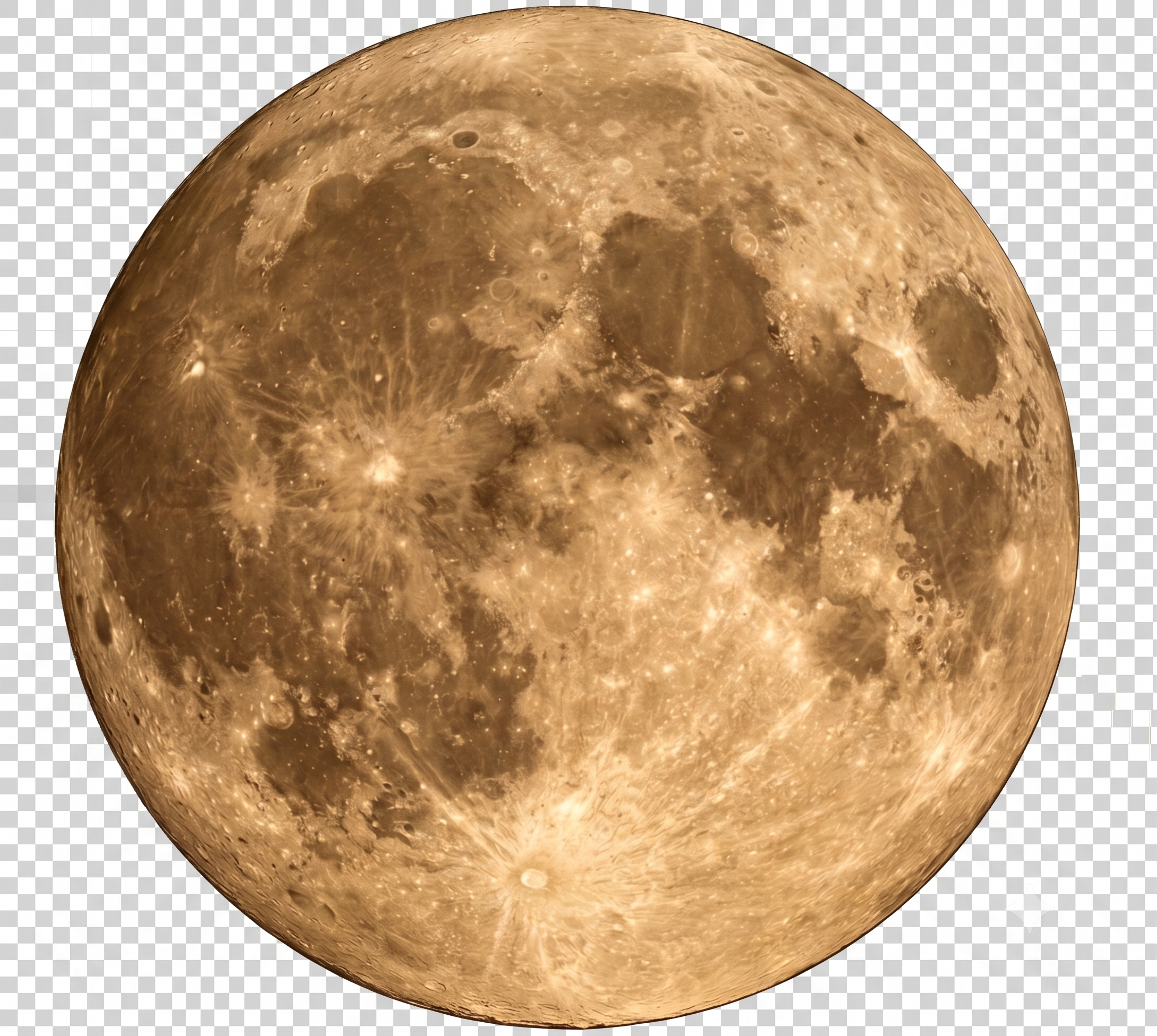
The Buck Moon rises tonight, July 29, 2026, as July's full moon reaches its peak illumination. The moon climbs above the eastern horizon near local sunset and remains visible through the night. For live phase data and tonight's exact moonrise time for your location, see the moon phase display.
The full moon of July has carried the name Buck Moon for centuries — named for the velvet-covered antlers that male deer grow through midsummer. Tonight's sky offers a clear opportunity to observe one of the year's most culturally resonant full moons, visible to the naked eye from any location with a clear eastern horizon.
Why It's Called the Buck Moon
The name Buck Moon comes from the observation that July is when male white-tailed deer have their new antlers in active growth, covered in soft tissue called velvet. Indigenous peoples of North America — particularly Algonquin-speaking communities — used monthly full moon names as a nature-based calendar, and July's full moon corresponded to this distinctive and visible seasonal event. The name was recorded in the Maine Farmer's Almanac and has since become the standard name for July's full moon in modern astronomical use.
For the full origin story, alternative names — including Thunder Moon and Hay Moon — and the cultural history behind this naming tradition, see the complete Buck Moon guide.
What to Expect in the Sky Tonight
Tonight's moon rises in the east near local sunset and remains above the horizon until after sunrise, providing a full night of moonlit skies. A full moon is the only phase that rises approximately when the sun sets — every other phase rises and sets at a different point in the day-night cycle, making tonight's Buck Moon uniquely suited to all-night observation.
In the hours just after moonrise, July's characteristic humidity across much of North America and Europe creates atmospheric scattering near the horizon, giving the rising moon a warm golden or amber tint. As the moon climbs higher, the light path through the atmosphere shortens and the color fades toward silver-white. The effect is most pronounced in coastal and inland areas with warm, moist air.
The moon reaches its highest point — its transit — around local midnight, tracking roughly due south in the Northern Hemisphere and due north in the Southern Hemisphere. At transit, the view is at its clearest: the moon is well above the horizon and above the thickest layer of atmosphere.
Best Viewing Tips for Tonight
No telescope is needed. The full moon is bright enough to read by on a clear night, and the naked eye resolves the major surface features — the dark maria, the bright highlands, and the ray systems around impact craters — without any optical aid. A few conditions improve the experience considerably.
Look east just after sunset. The most striking view is at moonrise, when the moon sits on or near the horizon and the Moon Illusion makes it appear larger than it does when high in the sky. The Moon Illusion is a well-documented perceptual effect in which the brain judges the moon as larger when framed against the horizon and nearby objects — buildings, trees, hills. The apparent size difference between a horizon moon and an overhead moon can feel dramatic, even though the moon's actual angular size does not change.
Allow time for dark adaptation. The eye takes several minutes to adjust from indoor lighting. A moon that initially appears as a flat, featureless disk resolves into more visible surface contrast once the eye has adapted. The full moon is bright enough that complete dark adaptation is not necessary — even partial adaptation helps.
Move away from direct light sources. City lights above the horizon do not affect the moon itself, but bright nearby lights impair the eye's adaptation without improving the view. A park, a hillside, or any spot where street lights are below eye level makes a noticeable difference in how much surface detail the eye can resolve.
Check tonight's exact moonrise time for your location on the Moon Phase Clock — the time varies significantly by longitude and latitude and can differ by more than an hour across a single time zone.
Is the Buck Moon a Supermoon?
The July 29, 2026 Buck Moon is not classified as a supermoon. A supermoon occurs when a full moon coincides with the moon's perigee — its closest orbital point to Earth in a given cycle — making the moon appear roughly 14% wider and about 30% brighter than a full moon at apogee, its farthest point. The effect is subtle enough that most observers cannot distinguish a supermoon from a standard full moon without direct comparison across months.
Tonight's Buck Moon falls at a typical full moon distance. For the exact Earth-Moon distance tonight, the moon phase display shows current orbital data alongside illumination percentage and phase.
How the Moon Looks Right Now
At full phase, the entire near side of the moon is lit by the sun — the terminator line that divides lunar day from night has retreated entirely to the limb, the edge of the visible disk. The result is a uniformly bright surface with no shadowing to give the craters and mountains their usual three-dimensional appearance. Paradoxically, the full moon is the phase that shows the least surface relief, because shadows that reveal topography at other phases are absent at full illumination.
The moon appears fully round to the naked eye for approximately one to two nights on either side of the exact-instant peak — the difference between tonight and tomorrow night is less than one percentage point of illumination. For a live rendering of tonight's moon phase, visit the moon phase homepage. For a full-screen view with real-time phase data, rise and set times, and the next phase countdown, open the Moon Phase Clock.
The Full Moon Calendar
July's Buck Moon is the seventh full moon of 2026. The next full moon — August's Sturgeon Moon — follows approximately 29.5 days later. The lunar cycle does not align evenly with calendar months, so the date of each full moon shifts from year to year. A complete list of this year's full moon dates, traditional names, zodiac positions, and countdowns is available on the full moon calendar.
Frequently Asked Questions
What time is the Buck Moon tonight?
The July 29, 2026 Buck Moon reaches peak fullness in the evening hours. The exact local time depends on your time zone — find tonight's moonrise time and full moon peak for your city on the Moon Phase Clock.
Is tonight's Buck Moon a supermoon?
No. The July 2026 Buck Moon does not coincide with a lunar perigee close enough to qualify as a supermoon by standard definitions. A supermoon requires the full moon to occur within approximately 360,000 km of Earth. Tonight's moon falls outside that threshold at a typical full moon distance.
Where should you look to see the Buck Moon tonight?
Look toward the eastern horizon starting around local sunset. The full moon rises in the east near sundown and tracks across the sky through the night, reaching its highest point due south around local midnight in the Northern Hemisphere. No telescope or special equipment is required — the Buck Moon is visible to the naked eye from any location with a clear sky.
How long does the Buck Moon stay full?
The full moon is technically a single instant — the moment Earth sits directly between the sun and moon. To the naked eye, the moon appears fully round for approximately one to two nights on either side of that peak. Tonight's Buck Moon will be indistinguishable from fully full throughout the night.