What Is the Buck Moon?
Quick Answer
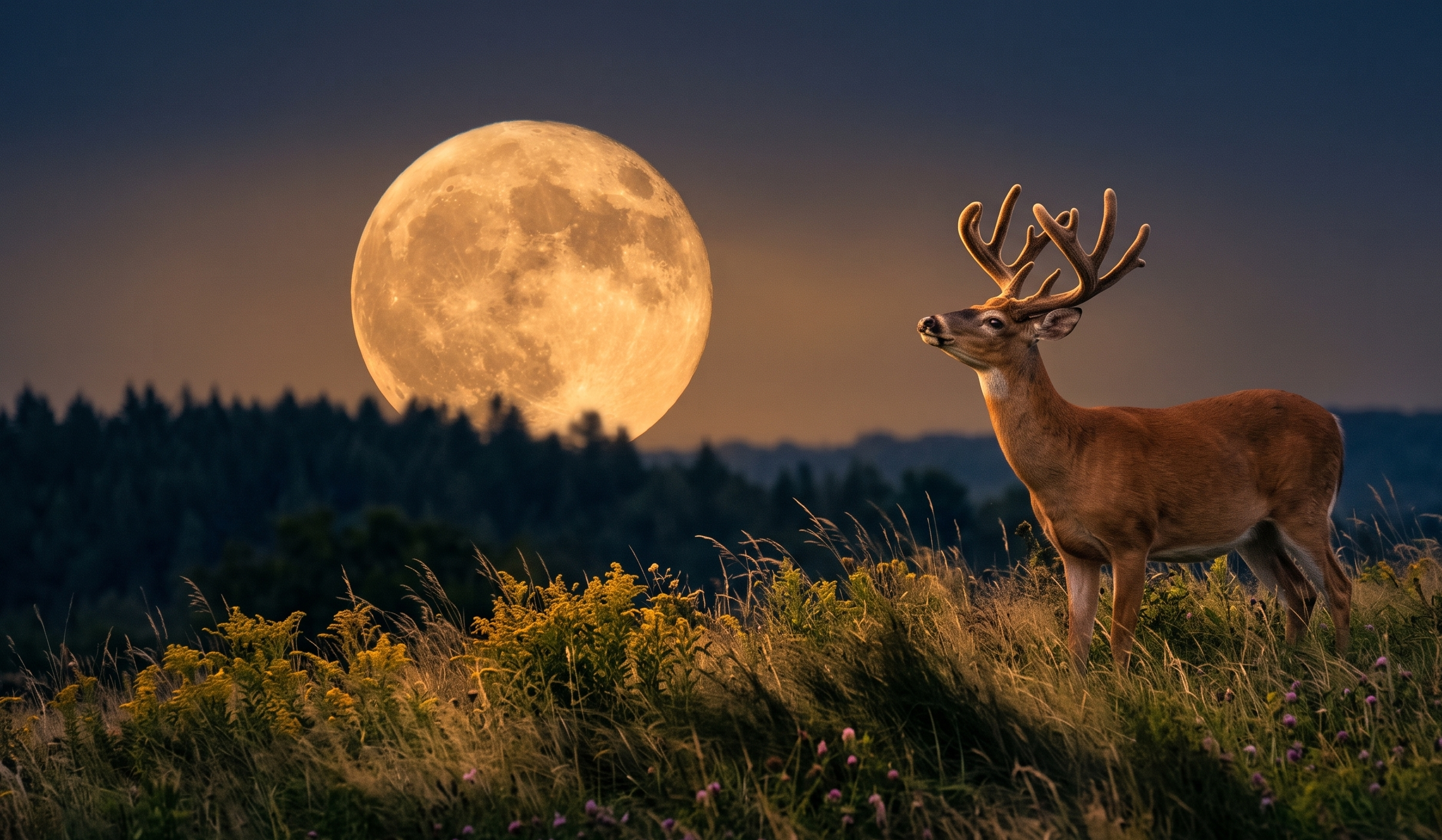
The Buck Moon is the traditional name for the full moon that occurs in July each year. The name comes from the Native American observation that male deer — called bucks — begin regrowing their antlers during early summer, with velvet-covered growth reaching its peak in July. Algonquin-speaking peoples of North America used this seasonal marker as part of a nature-based calendar, and the name was later documented in Colonial American almanac traditions.
Origin of the Name: Bucks in Velvet
Male deer shed their antlers each winter after the autumn rut and begin regrowing them in spring. By midsummer, the new antlers are developing rapidly, covered in velvet — a layer of soft tissue dense with blood vessels that supplies the nutrients needed for rapid bone growth. July marks the height of this cycle, making the image of velvet-antlered bucks a reliable and visible seasonal marker.
Indigenous peoples of North America — particularly Algonquin-speaking tribes — built a nature-based calendar around such observations, naming each full moon for the most prominent seasonal event of that period. This living almanac connected communities to the rhythms of the land, guiding hunting, planting, and gathering with precision.
The name was recorded and popularized in the English-speaking world through the Maine Farmer's Almanac, which published a 12-moon naming system in the 1930s drawing from the traditions of northeastern and Great Lakes tribes. It remains the most widely recognized name for July's full moon today.
When Does the Buck Moon Occur?
The Buck Moon always falls in July. The exact date shifts each year because the lunar cycle is 29.5 days — it does not divide evenly into calendar months, so the full moon drifts earlier or later within the month from year to year.
The full moon itself is a precise astronomical instant: the moment when Earth sits directly between the sun and moon, placing the moon in full shadow-free illumination as seen from Earth. The moon appears fully round for a night or two around that peak.
Use the Full Moon Calendar to find the next Buck Moon date and time for your location.
How to Observe the Buck Moon
No telescope or special equipment is needed. The full moon rises in the east near local sunset and is bright enough to cast shadows on a clear night.
Plan to be outside 15 to 30 minutes after local sunset and look toward the eastern horizon. The moon appears largest when rising or setting due to the Moon Illusion — a perceptual effect where the brain judges the moon as larger when framed against the horizon and distant objects.
July's warm, humid air often adds a golden or amber tint to the rising moon as atmospheric particles scatter shorter-wavelength light. Moving even a short distance from city lights makes a significant difference in clarity.
- Watch at moonrise — the most dramatic view, just after sunset
- Look east as the sun goes down
- July humidity gives the rising moon a warm golden color near the horizon
- Even a modest distance from city lights improves the view considerably
- Full moons are bright enough to cast visible shadows on a clear night
Other Names for July's Full Moon
July's full moon carries several traditional names, each reflecting a seasonal marker meaningful to a different culture or region.
Thunder Moon is the most widely used alternative, reflecting the frequency of afternoon thunderstorms across eastern North America in July. Hay Moon, common in English and European traditions, marks the timing of midsummer hay harvests. The Ojibwe name Raspberry Moon marks the peak of wild raspberry season. Other regional names include Mead Moon (linked to midsummer mead-making in older English traditions) and Salmon Moon in some Pacific Northwest traditions.
Buck Moon is the name most commonly used today by astronomers, meteorologists, and the popular press, largely because of its wide adoption through the Maine Farmer's Almanac tradition.
Cultural and Historical Significance
For Indigenous peoples across North America, each named moon was not merely a poetic label — it was a functional unit in a nature-based calendar that tracked the passage of the year through observable seasonal events: animal behavior, plant growth, weather patterns, and harvest windows.
Algonquin-speaking peoples, including Anishinaabe, Cree, and other Great Lakes and northeastern communities, were the primary source for the moon names most widely recorded in Colonial American accounts. European settlers, almanac writers, and naturalists documented these names throughout the 17th through 20th centuries.
The Maine Farmer's Almanac's publication of a standardized 12-moon naming system brought these names to a mass American audience. Today, each traditional full moon name is widely cited in weather forecasts, science news, and sky-watching guides as shorthand for the full moon of each month.
Use Our Tools
Frequently Asked Questions
Why is it called the Buck Moon?
July's full moon is called the Buck Moon because male deer — called bucks — are actively regrowing their antlers during midsummer. By July, the new antlers are growing rapidly under a covering of soft tissue called velvet, making this a distinctive and observable seasonal marker. The name was widely used by Algonquin-speaking peoples of North America and documented in Colonial American almanac traditions, most notably the Maine Farmer's Almanac.
When is the next Buck Moon?
The Buck Moon occurs once each year in July. The exact date varies because the lunar cycle is 29.5 days, which does not align evenly with the calendar month. Check the Full Moon Calendar to find the next Buck Moon date and time for your location.
Is the Buck Moon always in July?
Yes — the Buck Moon is always July's full moon, by definition. In the rare event that two full moons fall within July, the second one would be called a Blue Moon rather than a second Buck Moon.
What are other names for July's full moon?
July's full moon carries several traditional names: Thunder Moon (for the frequent afternoon storms common across eastern North America in July), Hay Moon (tied to the midsummer hay harvest in temperate climates), Raspberry Moon (an Ojibwe name marking wild raspberry season), and Mead Moon (an older English name). Buck Moon is the most widely recognized and used today.
How can I see the Buck Moon?
No equipment is needed. Head outside after local sunset and look east — the full moon rises near sundown and is bright enough to see even from moderately lit suburbs. For the most dramatic view, watch the moon rise along the horizon in the 15–30 minutes after sunset. July's humid air often gives the rising moon a warm golden color as it clears the horizon.
Related Guides
More Moon Guides
All guides →Loading live moon data…