What Is the Sturgeon Moon?
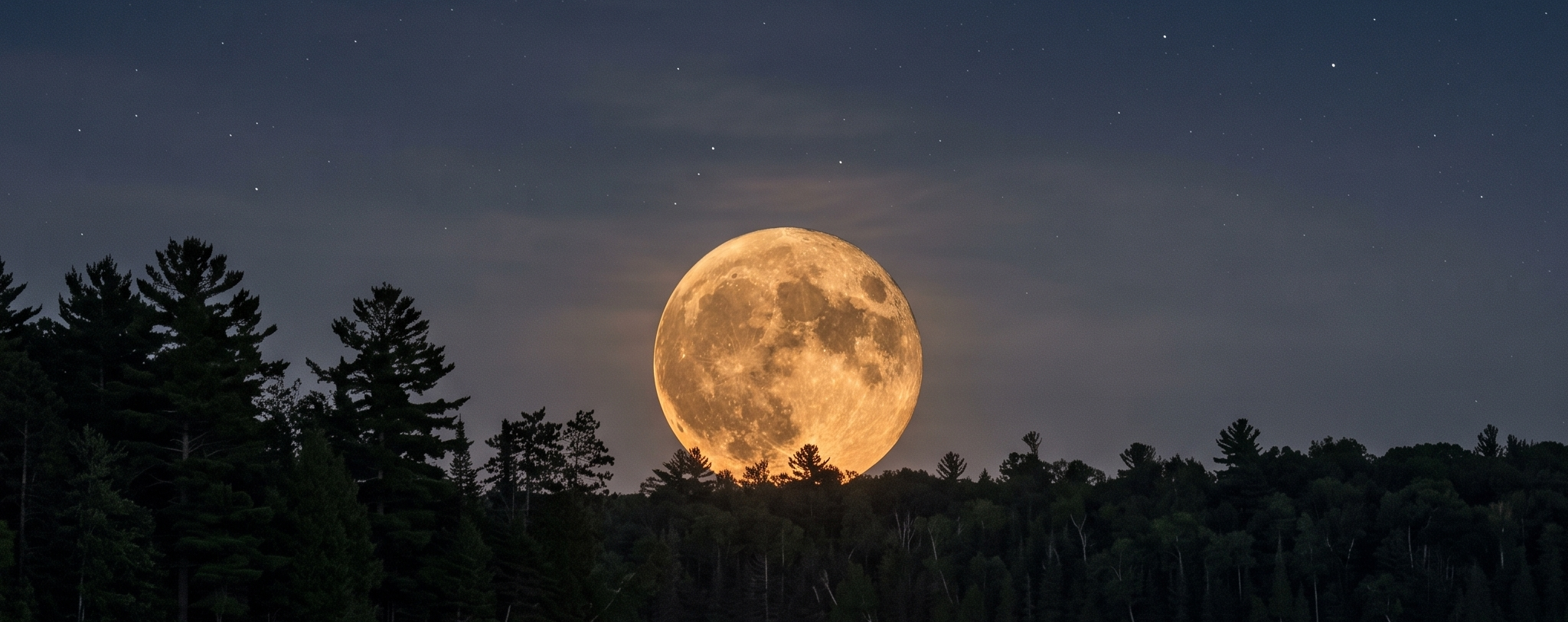
Quick Answer
The Sturgeon Moon is the traditional name for the full moon that occurs in August each year. The name originates from Algonquin-speaking Indigenous peoples of the Great Lakes and Lake Champlain region — particularly Ojibwe and other Anishinaabe communities — who observed that lake sturgeon were most readily caught in late summer. By August, sturgeon moved into shallower waters where they could be harvested in abundance, making this the most productive period for fishing these ancient, long-lived fish. The name was later recorded and spread through Colonial American almanac traditions, most notably the Maine Farmer's Almanac.
Origin of the Name: Lake Sturgeon Season
The lake sturgeon (Acipenser fulvescens) is one of North America's oldest and largest freshwater fish — a living relic of the Cretaceous period, largely unchanged for over 100 million years. In the Great Lakes region and Lake Champlain, August brought sturgeon into shallower waters and closer to shore, making them exceptionally catchable at a time when communities depended on the late-summer fishing bounty before autumn preparations.
Algonquin-speaking peoples of the northeastern woodlands and Great Lakes — including Ojibwe and other Anishinaabe communities — built a nature-based calendar around such seasonal observations, assigning each full moon a name that served as a functional marker in the agricultural and foraging year. The Sturgeon Moon signaled the height of the fishing season and guided the timing of fish harvests, preservation, and community gatherings.
The name entered the wider English-speaking record through Colonial American almanacs. The Maine Farmer's Almanac, which published a systematized 12-moon naming calendar in the 1930s drawing from northeastern and Great Lakes tribal traditions, brought the name to a mass American audience. Today it is the most widely recognized name for August's full moon.
When Does the Sturgeon Moon Occur?
The Sturgeon Moon always falls in August. The exact date shifts each year because the lunar cycle is 29.5 days — it does not divide evenly into calendar months, so the full moon drifts earlier or later within August from year to year.
The full moon itself is a precise astronomical instant: the moment when Earth sits directly between the sun and moon, placing the moon in full illumination as seen from Earth. The moon appears fully round for a night or two on either side of that peak.
Use the Full Moon Calendar to find the next Sturgeon Moon date and exact time for your location.
How to Observe the Sturgeon Moon
No telescope or special equipment is needed. The full moon rises in the east near local sunset and is bright enough to cast shadows on a clear night.
Plan to be outside 15 to 30 minutes after local sunset and look toward the eastern horizon. The moon appears largest when rising due to the Moon Illusion — a perceptual effect where the brain judges the moon as larger when framed against the horizon and distant objects.
August brings its own viewing advantage: warm nights, comfortable late-summer air, and the presence of the annual Perseid meteor shower, which peaks in mid-August. On years when the Perseid peak coincides with a dark phase of the moon, the Sturgeon Moon rises in the same August week as some of the best meteor-watching of the year.
- Watch at moonrise — the most dramatic view, just after sunset
- Look east as the sun goes down
- August's warm air often gives the rising moon a golden or amber hue near the horizon
- The Perseid meteor shower peaks in mid-August — check whether it coincides with a dark moon night nearby
- Even a modest distance from city lights improves the view considerably
- Full moons are bright enough to cast visible shadows on a clear night
Other Names for August's Full Moon
August's full moon carries several traditional names, each reflecting a seasonal marker meaningful to a different culture or region.
Green Corn Moon is one of the most widely used alternatives, reflecting the timing of the corn harvest across parts of North America — green corn is typically ready for harvest in August, representing a critical food source before winter. Grain Moon, common in English and European farming traditions, marks the broader grain harvest season. Red Moon is another traditional name: August's warm, hazy nights frequently give the rising moon a deep reddish-orange color as its light travels through more atmosphere near the horizon. Flying Up Moon appears in some Ojibwe and regional traditions, referring to young birds taking their first flights in late summer.
Sturgeon Moon is the name most commonly used today by astronomers, meteorologists, and the popular press, largely because of its wide adoption through the Maine Farmer's Almanac tradition.
Cultural and Historical Significance
For Indigenous peoples across North America, named moons were not poetic decoration — they were functional calendar entries that tracked the progression of the year through observable events: fish runs, crop timing, animal migration, and weather patterns.
The Ojibwe and other Anishinaabe peoples who named the Sturgeon Moon lived in close relationship with the Great Lakes fishery. Lake sturgeon could grow to enormous sizes — historical records describe specimens over seven feet long and weighing more than 300 pounds — and their late-summer abundance represented a critical subsistence and trade resource. The Sturgeon Moon thus marked not just a celestial event but a practical seasonal window of great economic and nutritional importance to the communities who observed it.
European settlers, almanac writers, and naturalists documented and adapted these names throughout the 17th through 20th centuries. The Maine Farmer's Almanac standardized a 12-moon naming system that became the reference used by the Old Farmer's Almanac, NASA, and mainstream media today. Each traditional full moon name persists as shorthand connecting modern observers to a much older tradition of sky-watching rooted in the North American landscape.
Use Our Tools
Frequently Asked Questions
Why is it called the Sturgeon Moon?
August's full moon is called the Sturgeon Moon because lake sturgeon — large, ancient freshwater fish — were most readily caught in August in the Great Lakes and Lake Champlain region. Algonquin-speaking peoples, including Ojibwe and other Anishinaabe communities, named this full moon for the height of the sturgeon fishing season. The name was documented in Colonial American almanac traditions and popularized through the Maine Farmer's Almanac.
When is the next Sturgeon Moon?
The Sturgeon Moon occurs once each year in August. The exact date shifts because the lunar cycle is 29.5 days, which does not align evenly with the calendar month. Check the Full Moon Calendar to find the next Sturgeon Moon date and exact time for your location.
Is the Sturgeon Moon always in August?
Yes — the Sturgeon Moon is always August's full moon by definition. In the rare case that two full moons fall within August, the second would be called a Blue Moon rather than a second Sturgeon Moon.
What are other names for August's full moon?
August's full moon carries several traditional names: Green Corn Moon (marking the late-summer corn harvest), Grain Moon (tied to the grain harvest in English and European farming traditions), Red Moon (for the deep amber color the August moon often takes near the horizon), and Flying Up Moon in some Ojibwe traditions. Sturgeon Moon is the most widely recognized name today.
How can I see the Sturgeon Moon?
No equipment is needed. Head outside after local sunset and look east — the full moon rises near sundown and is visible even from moderately lit suburbs. Watch in the 15–30 minutes after sunset for the most dramatic view as the moon clears the horizon. August's warm nights are ideal for observing, and the Perseid meteor shower peaks in mid-August — check whether its dark-moon nights fall near the Sturgeon Moon date.
Related Guides
More Moon Guides
All guides →Loading live moon data…